






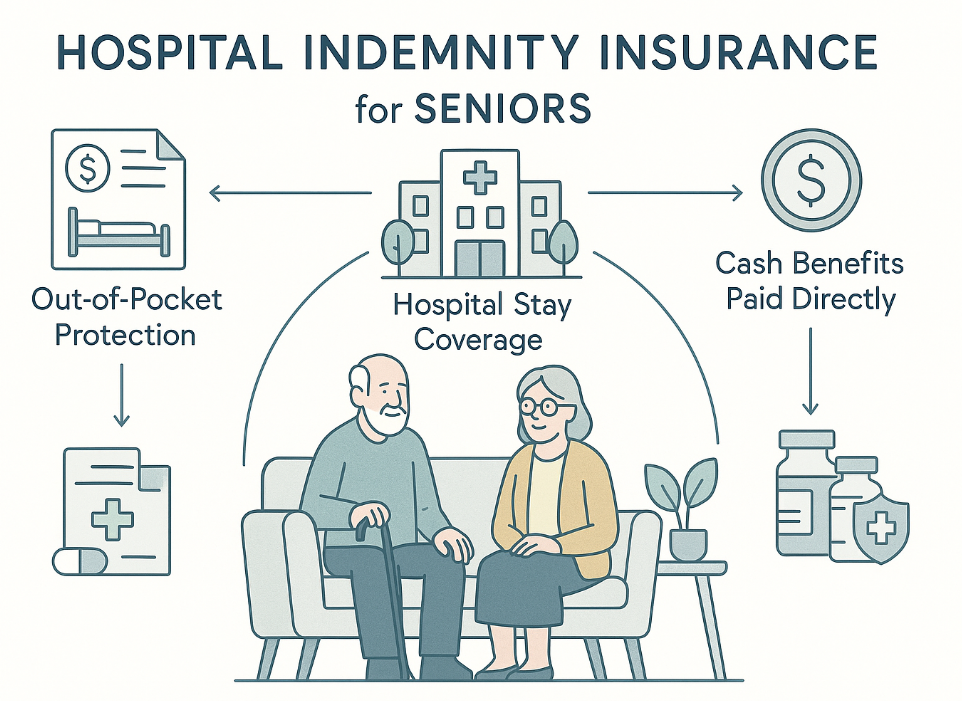
Hospital indemnity insurance gives seniors a financial cushion when a hospital stay leads to costs that regular health insurance or Medicare does not cover.
Instead of paying doctors or hospitals directly, this type of policy pays a fixed cash benefit to the insured person after a covered hospital stay.
The money can help with deductibles, copays, transportation, home support, and other expenses that often follow a hospital visit.
The overview below explains what hospital indemnity insurance is, how it fits alongside Medicare, and what to review before adding a policy to your coverage mix.
The goal is to help you decide whether a hospital indemnity plan belongs in your personal insurance strategy.
What Is Hospital Indemnity Insurance?
Hospital indemnity insurance is a type of supplemental insurance that pays a set cash benefit when you are admitted to the hospital for a covered stay.
The benefit is often paid per day of confinement or as a single lump sum, depending on the policy design.
Unlike traditional hospital insurance or Medicare, which pays health care providers for covered services, a hospital indemnity policy pays you directly.
You can use the cash benefit in any way that helps your situation. Some people apply it to medical bills. Others use it for everyday expenses such as groceries, household utilities, or help around the home while they recover.
Policies are usually customizable. You choose the daily benefit amount, benefit period, and sometimes add riders for services such as intensive care or certain outpatient procedures.
This flexibility allows hospital indemnity insurance to fit different budgets and health profiles.
How Hospital Indemnity Insurance Works With Medicare
Medicare covers many hospital costs, but it does not remove every financial responsibility. For example, Medicare Part A includes a sizable deductible for each benefit period and daily coinsurance amounts after a certain number of days in the hospital. Extended stays, repeat admissions, or related services can create sizable out-of-pocket costs for seniors on a fixed income.
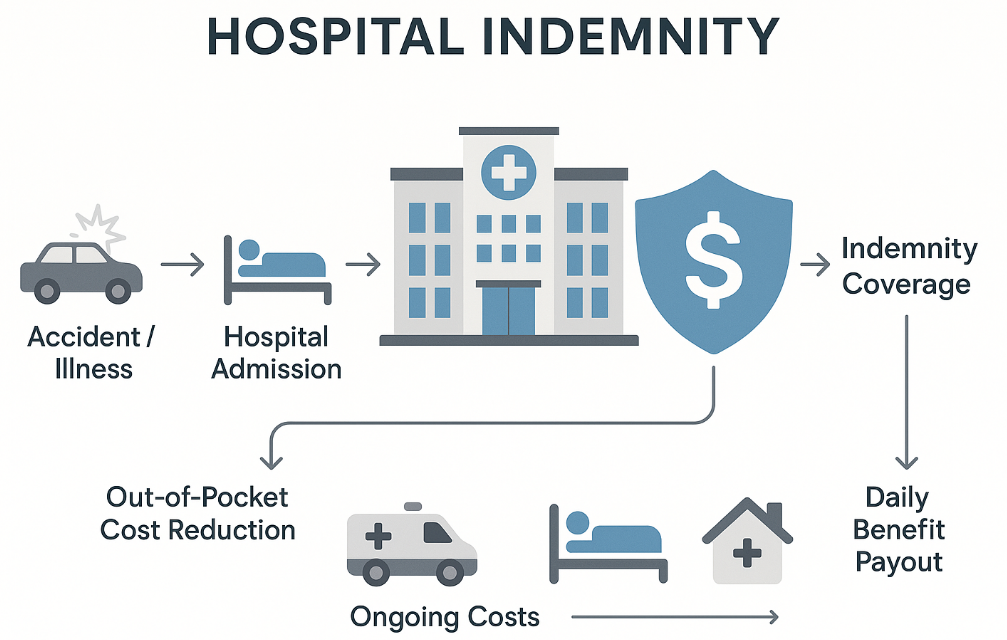
Hospital indemnity insurance is designed to sit on top of Medicare, not replace it. When a covered hospital stay occurs, Medicare or other health insurance pays its share to the hospital. The hospital indemnity plan then pays a fixed cash benefit directly to you, regardless of what Medicare paid. There is no coordination-of-benefits calculation that reduces your indemnity payment.
This structure means a hospital indemnity policy can help:
-
- Offset the Part A deductible and coinsurance
- Cover copays tied to a Medicare Advantage plan
- Provide funds for travel costs, home care, or follow-up therapy
Because the benefit is independent of Medicare payments, hospital indemnity insurance can support you even when traditional coverage is working as intended.
Comparing Hospital Insurance and Hospital Indemnity
Both hospital insurance and hospital indemnity insurance relate to inpatient care, yet they function in different ways. Traditional hospital insurance, including Medicare Part A or employer plans, focuses on paying approved medical charges directly to the provider. Coverage amounts are based on billed services, plan rules, networks, and allowed charges.
Hospital indemnity insurance, by contrast, has a simpler benefit trigger. If you meet the policy’s definition of a covered hospital stay or confinement, the insurer pays the agreed cash benefit. The payment is not linked to specific billing codes or claim amounts. If your policy pays 250 dollars per day for five days in the hospital, you receive 1,250 dollars, even if your other insurance covered the entire hospital bill.
Because of this difference, hospital indemnity insurance works best as supplemental insurance rather than a stand-alone medical plan. It does not replace the need for Medicare, Medigap, or Medicare Advantage coverage. Instead, it helps you manage expenses that those plans leave behind, offering a measure of financial stability during stressful times.
Common Costs a Hospital Indemnity Plan Can Help Cover
A hospital stay often brings expenses that stretch beyond the hospital bill itself. Even with strong health insurance, seniors may face:
-
- Medicare deductibles and coinsurance
- Copays tied to Medicare Advantage plans
- Transportation to and from the hospital or rehab
- Parking or lodging for family members
- Home health support after discharge
- Physical or occupational therapy is not fully covered
- Every day, bills become harder to manage while recovering
Hospital indemnity insurance does not restrict how you use the cash benefit, which makes it useful for these varied costs. Some seniors apply the funds directly to medical bills. Others use the benefit to keep up with mortgage payments, utilities, or caregivers’ wages while income or savings are under pressure.
This flexibility distinguishes hospital indemnity plans from traditional policies that pay only approved medical charges.
Benefits of Hospital Indemnity Insurance for Seniors
For many older adults, the strongest appeal of hospital indemnity insurance is the sense of security it provides. Hospital stays can happen unexpectedly after a fall, sudden illness, or surgery. When a stay occurs, the policy offers a straightforward financial response.
Benefits often include:
-
- A predictable cash benefit for covered hospital stays
- Independence from medical billing amounts
- Flexibility in how funds are used
- The ability to supplement any Medicare, Medicare Advantage, or employer plan
Seniors who manage chronic conditions or who have experienced multiple hospitalizations often appreciate the added support. The benefit can help preserve savings that would otherwise be used for deductibles, coinsurance, or related household expenses.
For family members, knowing that cash will be available during a hospital stay may reduce stress and make it easier to arrange travel, caregiving, and time away from work.
Choosing a Hospital Indemnity Plan: Factors to Compare
Not all hospital indemnity plans are identical, so it helps to compare policy details before enrolling. Several elements deserve close attention:
Benefit amount and structure
Policies may pay a daily benefit, a lump sum per stay, or a combination. Higher benefit levels typically carry higher premiums. Consider your current coverage, typical local hospital costs, and budget when deciding on a benefit amount.
Covered events
Some plans pay only for full inpatient admissions. Others may include observation stays, intensive care, or certain outpatient surgeries. Review definitions carefully to understand which situations trigger benefits.
Benefit period and limits
A policy may limit the number of days paid per stay, per year, or per lifetime. Seniors who anticipate longer or repeat stays may want higher limits or extended benefit periods.
Waiting periods and exclusions
Many insurers impose waiting periods for preexisting conditions or exclude specific diagnoses. Read the fine print so you know when coverage begins and what situations are not covered.
Premium costs and affordability
Premiums depend on age, coverage level, and insurer. It is important to select a policy that fits your monthly budget while still offering meaningful support for hospital expenses.
Company reputation and claims process
Look for carriers with strong customer service and reliable claims handling. During a hospital stay, quick and clear benefit payments matter.
A licensed insurance agent who works with multiple carriers can help compare hospital indemnity plans side by side and match benefits to your needs.
Myths and Misunderstandings About Hospital Indemnity Coverage
Several common misunderstandings can cause seniors to overlook hospital indemnity insurance or misunderstand what it provides.
One frequent belief is that Medicare alone removes the need for any additional coverage. While Medicare does provide broad protection, deductibles and coinsurance can still be sizeable, especially for longer stays or repeat admissions.
Hospital indemnity insurance is intended to help with these remaining costs, not replace Medicare.
Another misunderstanding is that benefits can be used only for medical bills. In reality, the cash benefit is generally yours to use as you wish, whether that involves hospital charges, home care, or everyday household expenses.
Some seniors also assume that adding hospital indemnity insurance will interfere with existing policies.
In fact, indemnity plans are designed to operate independently. They pay benefits based on hospital confinement, regardless of what other plans cover.
Clarifying these points can help seniors examine hospital indemnity insurance with a more accurate understanding of its role in an overall coverage plan.
Who May Benefit Most from Hospital Indemnity Insurance?
Hospital indemnity insurance is not necessary for everyone, but certain groups of seniors may find it particularly helpful.
People with high deductible or high coinsurance medical plans may want added protection against high out-of-pocket costs if they are hospitalized.
Those who manage chronic conditions, such as heart disease or lung disorders, may face a higher likelihood of future hospital stays and value the predictable cash benefit.
Seniors who rely on fixed retirement income or who want to preserve savings for other goals may also appreciate the extra cushion. For some households, even a brief hospital stay can affect cash flow, especially if family members must take time off work to help. Hospital indemnity insurance can ease that strain.
Finally, individuals who do not have extensive emergency savings may view an indemnity plan as part of a broader strategy to manage unexpected medical events.
By pairing it with Medicare, Medigap, or Medicare Advantage coverage, they create a layered approach to medical and financial risk.
How to Add Hospital Indemnity Insurance to Your Coverage
If you are interested in hospital indemnity insurance, the next step is to review available policies and decide whether one fits your needs and budget. Insurers may offer these plans directly or through licensed agents who specialize in Medicare-related coverage.
A typical review process includes:
-
- Listing your current coverage, including Medicare, Medigap, or Medicare Advantage plans.
- Estimating potential out-of-pocket costs for a hospital stay under your existing coverage.
- Considering how a hospital indemnity policy might help offset those costs or protect savings.
- Comparing benefit amounts, waiting periods, exclusions, and premiums from several insurers.
An experienced agent can walk through sample scenarios with you, showing how a hospital indemnity plan would have paid benefits in a past hospital stay or how it might respond to a future event.
This approach helps translate policy language into real-world impact.
If you decide hospital indemnity insurance fits your situation, enrollment is usually straightforward.
Many policies use simplified underwriting, although some may ask health questions. Once approved, you pay regular premiums and receive policy documents that explain when and how to file a claim after a hospital stay.
For seniors who want to protect savings from unexpected hospital expenses, a hospital indemnity plan can be a practical addition to an overall Medicare strategy.
If you would like help comparing options or understanding how this type of coverage might work with your existing plans, consider speaking with a licensed Medicare specialist who can review policies available in your state and guide you through the decision-making process.